

 18Mar
18Mar
When planning your home’s interior transformation, selecting the right false ceiling designs for living room and bedroom spaces becomes a critical decision that impacts both aesthetics and functionality. A thoughtfully designed false ceiling does more than conceal wiring and pipes. It reshapes how you experience your living spaces through improved lighting, better proportions, and enhanced visual appeal. This comprehensive guide provides practical insights into false ceiling design, helping Pakistani homeowners make informed decisions that align with their style preferences, functional needs, and budget realities.
Modern homes increasingly integrate false ceilings as fundamental design elements rather than optional additions. Whether you’re building new or renovating existing spaces, understanding ceiling design principles empowers you to create interiors that feel professionally finished while serving practical purposes. This article examines design approaches, material considerations, room-specific strategies, and coordination with furniture to ensure your ceiling design investment delivers lasting value and satisfaction.
A false ceiling, also known as a dropped ceiling, is a secondary ceiling installed below the main structure to improve aesthetics and functionality (what is a false ceiling).
New Ceiling Design for Modern Homes
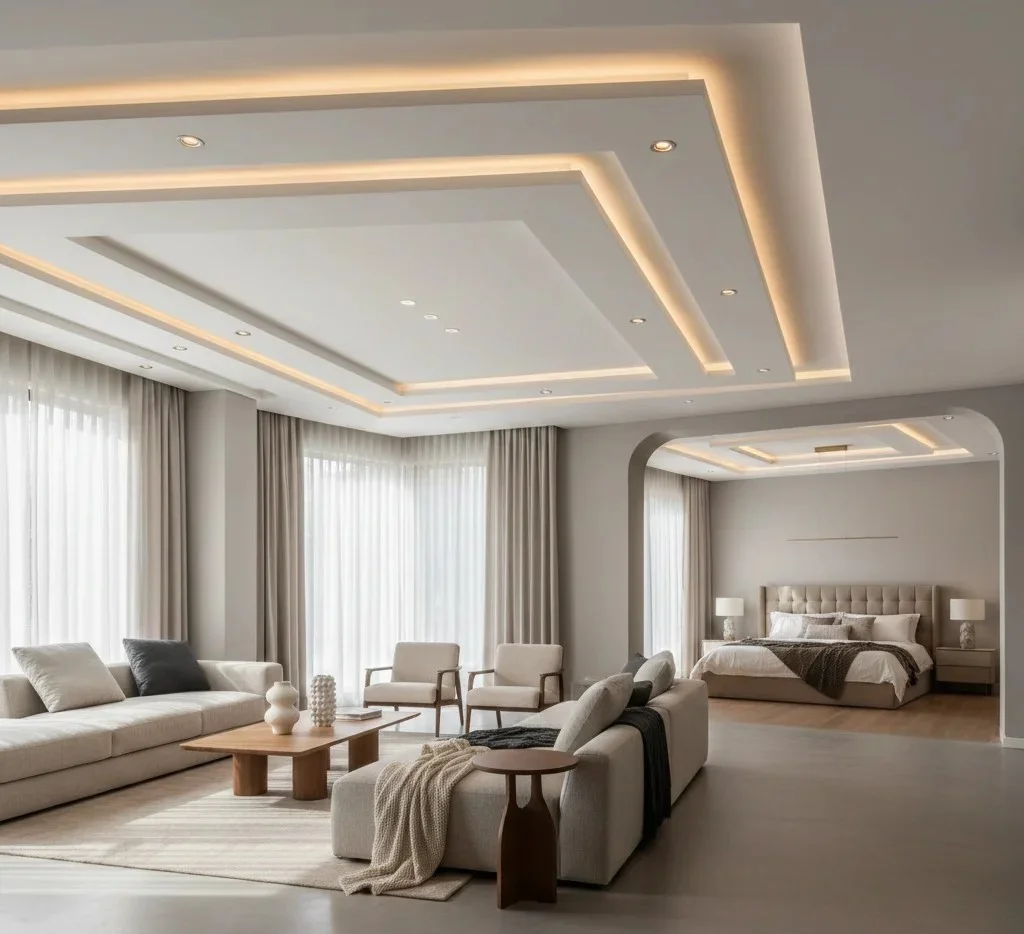
New ceiling design trends reflect evolving lifestyles and technological integration in contemporary homes. Today’s ceiling designs emphasize clean geometry, subtle complexity, and seamless technology integration rather than ornate decorative patterns. Modern approaches favor strategic design interventions by using false ceiling elements to define specific zones, highlight architectural features, or create lighting effects rather than covering entire ceiling surfaces with uniform treatments.
The shift toward minimalism with purpose characterizes current design thinking. Instead of elaborate plasterwork or heavy ornamentation, contemporary ceilings use simple recessed sections, geometric cutouts, and lighting integration to create sophisticated visual interest. This restrained approach produces interiors that feel spacious and uncluttered while still delivering the practical benefits of false ceiling installations. The design serves function first, with aesthetic appeal emerging from thoughtful execution rather than decorative excess.
Material innovation expands creative possibilities in ceiling design. While gypsum board remains the standard choice for its versatility and smooth finish, designers now incorporate wood panels, metal accents, fabric inserts, and occasionally glass elements to introduce texture and visual variation. Combining materials within a single ceiling plane creates depth and character without requiring complex structural modifications. These material choices must consider both aesthetic goals and practical factors like maintenance requirements and climate suitability for Pakistani conditions.
Smart home integration increasingly influences ceiling design planning. Modern false ceilings accommodate recessed speakers, motion sensors, smart lighting systems, and climate control components from the initial design stage. This forward-thinking approach ensures technology enhances living comfort without compromising aesthetic cleanliness. Proper planning prevents visible wiring, awkward equipment placement, or future modifications that might compromise the ceiling’s finished appearance.
False Ceiling Designs for Living Room
Living room false ceiling designs for living room spaces require balancing visual impact with practical considerations specific to your home’s primary gathering area. The living room ceiling must complement furniture arrangements, work with existing natural light patterns, and create an atmosphere that transitions smoothly from daytime functionality to evening relaxation. Effective living room ceiling design considers the room as a complete environment rather than treating the ceiling as an isolated surface.
Proportion awareness drives successful living room ceiling design. Rooms with generous ceiling heights can accommodate multi-level designs that add architectural drama without feeling oppressive. Standard height rooms benefit from simpler approaches that maintain or enhance the sense of vertical space. The ceiling design should feel integrated with wall treatments and flooring choices, creating visual continuity rather than competing elements. Scale matters because ceiling features should relate proportionally to room dimensions and furniture scale.
Color strategy significantly impacts how ceiling design affects room perception. Light neutrals remain popular because they maximize light reflection and create spacious feelings. However, incorporating contrast through recessed sections with slightly darker tones or accent lighting can add sophistication without sacrificing brightness. Some contemporary designs feature bold geometric patterns or color blocking in specific ceiling sections, creating focal points that anchor the room’s design narrative while maintaining overall brightness through strategic color placement.
Lighting distribution deserves careful consideration in living room ceiling planning. Effective designs combine ambient lighting for general illumination, task lighting for specific activities like reading, and accent lighting to highlight artwork or architectural features. This layered approach, enabled by false ceiling infrastructure, creates adaptable environments that serve diverse needs throughout the day without relying on a single central fixture that produces flat, uninspiring illumination.
False Ceiling Design for Living Hall
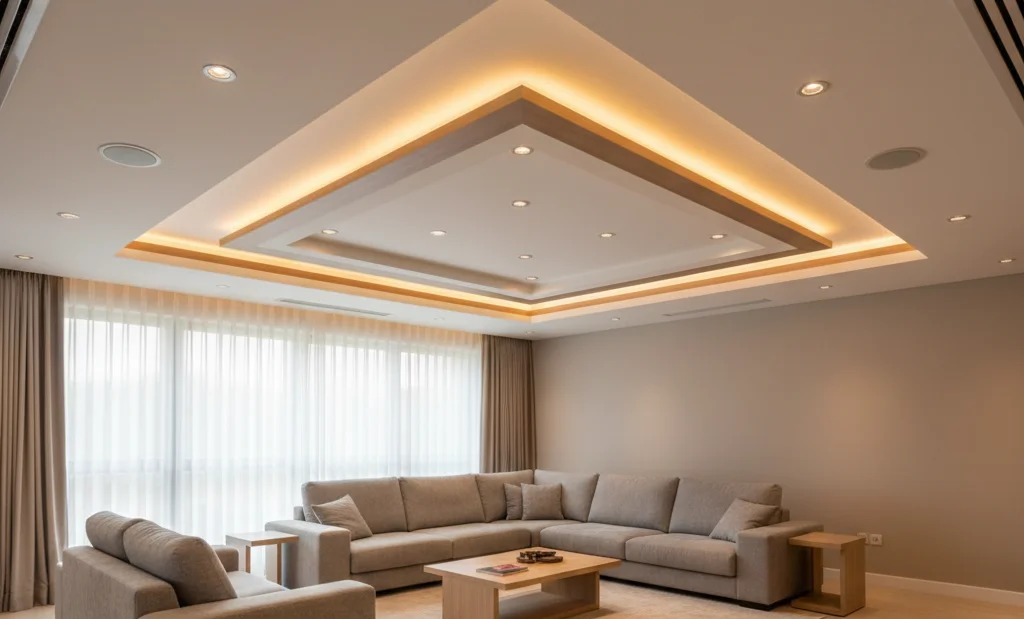
False ceiling design for living hall contexts demands attention to scale and formality, as living halls typically serve entertaining functions and create first impressions. These spaces often feature larger dimensions and higher ceilings than standard living rooms, creating opportunities for more substantial false ceiling treatments. Multi-tiered designs with integrated statement lighting establish grandeur while maintaining elegant proportions that complement the room’s formal character.
Geometric organization provides structure in living hall ceiling design. Symmetrical arrangements of rectangular coffers, square recesses, or circular medallions create classical elegance that suits traditional architectural styles. Contemporary approaches might employ asymmetrical compositions or flowing curved forms that deliver sophisticated modernity. The choice between traditional and contemporary aesthetics should reflect your home’s overall architectural character and your personal style preferences.
Central feature integration plays an important role in living hall ceilings. A distinctive chandelier, pendant cluster, or architectural lighting element positioned centrally draws the eye upward and creates a focal point that anchors the room’s design. The false ceiling design should frame and support this central feature rather than competing with it. Surrounding ceiling sections provide context that enhances the feature’s impact through contrast, complementary shapes, or strategic lighting placement.
Perimeter detailing completes living hall ceiling design. Crown molding, cove lighting, or stepped transitions between ceiling levels and walls add finish quality that distinguishes professionally designed spaces from basic installations. These details require precise execution but deliver substantial impact on the overall room appearance, signaling attention to quality that extends throughout your home’s interior design.
False Ceiling Design for Lounge
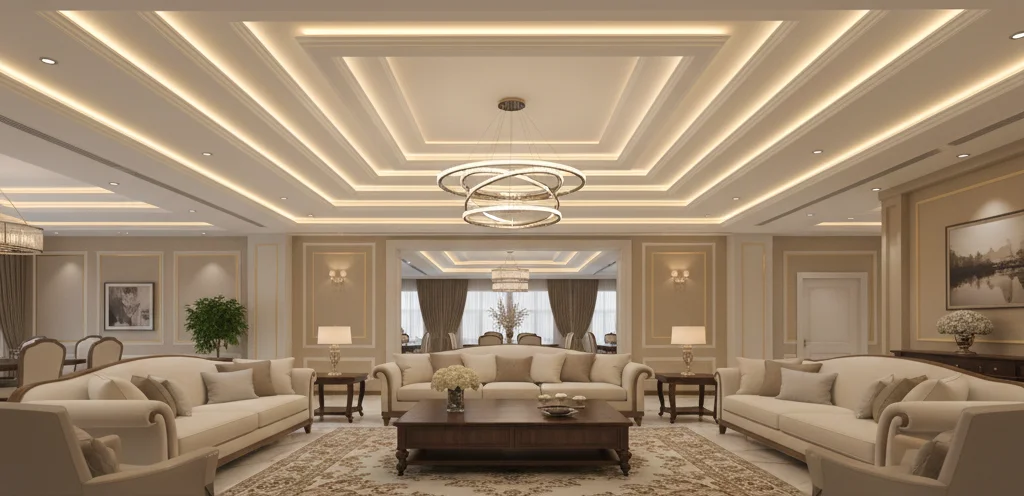
False ceiling design for lounge areas prioritizes comfort and versatility, as lounges accommodate diverse activities from entertainment viewing to conversation or reading. Lounge ceiling design should create relaxed atmospheres while incorporating functional elements supporting modern lifestyles. The design balances aesthetic appeal with practical features like concealed technology integration and flexible lighting arrangements.
Zone definition through ceiling design proves particularly valuable in lounge spaces. Lowering ceiling height above primary seating areas creates intimate zones within larger rooms without requiring physical partitions. These dropped sections can incorporate indirect lighting that provides comfortable illumination for extended periods without causing eye strain. The height variation adds architectural interest while subtly organizing the room into functional areas that support different activities.
Technology accommodation represents a key consideration for contemporary lounge ceiling design. Concealing audio-visual equipment, speaker systems, and cable management within false ceiling structures maintains clean aesthetics while supporting entertainment systems. Planning these elements during the design phase ensures proper placement and prevents visible wiring or equipment that compromises the room’s appearance. Access panels in strategic locations allow future modifications without damaging finished surfaces.
Material warmth contributes to lounge comfort. While living halls might feature crisp, formal finishes, lounge ceilings benefit from slightly warmer material choices or finishes that enhance the space’s relaxed character. Wood veneer accents, warmer paint tones in recessed sections, or textured finishes create inviting environments that encourage extended use and relaxation.
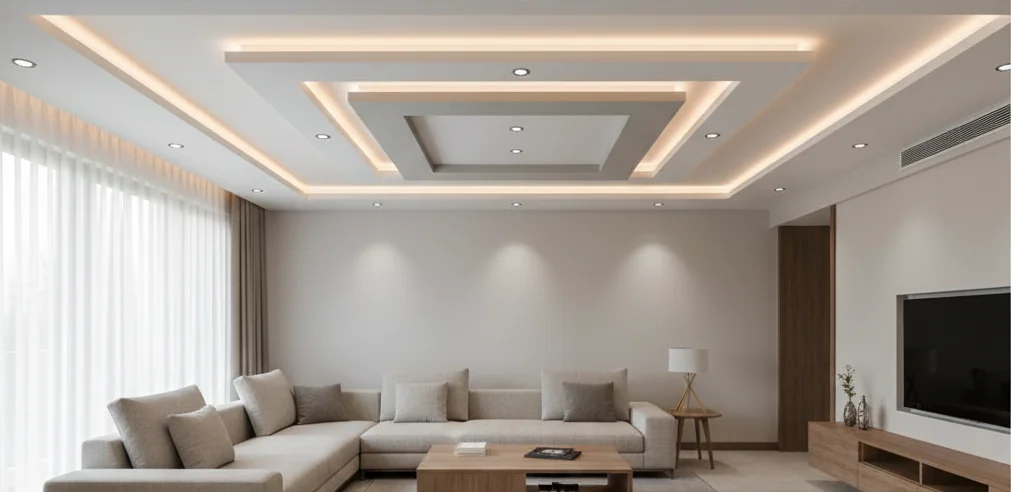
Bedroom False Ceiling Design Ideas
Creating a Calm and Personalized Bedroom Environment
Bedroom false ceiling design focuses on creating a calm, comfortable, and personalized environment that supports rest, relaxation, and everyday bedroom activities. Unlike living rooms or lounges that require flexible and dynamic atmospheres, bedroom ceilings should maintain a consistently soothing character. As bedrooms function as private retreats, ceiling design choices can reflect individual style more strongly without the need to cater to general or guest preferences.
Impact of Ceiling Design on Comfort and Sleep Quality
A well designed bedroom ceiling contributes directly to mental comfort and sleep quality. Overly complex patterns, harsh lighting, or excessive visual contrast can overstimulate the mind and interfere with relaxation. Successful bedroom false ceiling designs prioritize clean lines, balanced proportions, and cohesive aesthetics. Visual interest can still be achieved through subtle design elements such as gentle curves, simple geometric forms, layered recesses, or soft transitions between ceiling levels without compromising the peaceful nature of the space.
Ceiling Height and Bedroom Ambiance
Ceiling height treatment plays an important role in shaping bedroom ambiance. In larger bedrooms, slightly lowering the ceiling height in selected areas helps create a sense of intimacy and warmth, preventing the room from feeling empty or impersonal. In smaller bedrooms, designs that emphasize vertical openness through shallow recesses, light colors, or minimal ceiling drops help maintain a spacious and comfortable feel. Careful ceiling planning ensures visual comfort without unnecessary height reduction.
Lighting Flexibility for Everyday Bedroom Use
Lighting flexibility is a core advantage of bedroom false ceiling design. Bedrooms serve multiple purposes beyond sleeping, including dressing, reading, working, or relaxing. A combination of ambient lighting for general illumination, task lighting for functional areas such as wardrobes or study corners, and soft accent lighting for evening relaxation creates a balanced environment. Dimmable lighting systems or separate lighting circuits allow residents to adjust brightness and mood according to time of day and activity, enhancing both functionality and comfort.
Material Selection for Bedroom False Ceilings
Material selection should balance appearance with performance. Gypsum board remains the most popular choice for bedroom false ceilings due to its smooth finish, affordability, and compatibility with all design styles. Wood veneer or panel accents add warmth and natural texture, particularly suitable for traditional or contemporary bedrooms seeking a cozy atmosphere. In multi story homes, acoustic panels or insulation within the false ceiling help reduce noise transfer, improving privacy and sleep quality.
Gypsum board remains the most popular choice for bedroom false ceilings due to its smooth finish, affordability, and durability, as explained by gypsum board false ceiling material manufacturers like Gyproc.
Importance of Quality Execution
Design execution quality significantly affects the final result. Clean joints, even surfaces, accurate lighting alignment, and high quality paint finishes distinguish refined bedroom ceilings from basic installations. Even simple ceiling designs require precise workmanship to achieve a polished and sophisticated appearance. Poor execution leads to visible imperfections that diminish the overall bedroom experience.
Coordinating Ceiling Design with Furniture
Bedroom ceiling design should harmonize with furniture style and room layout. Traditional furniture pairs well with warmer ceiling tones and subtle detailing, while modern minimalist furniture complements simple ceiling designs with clean geometry and restrained lighting. Ceiling elements should enhance the room visually without overpowering furniture or making the space feel crowded. Thoughtful coordination creates a unified bedroom interior where all elements work together seamlessly.
Popular Bedroom False Ceiling Styles
Popular bedroom ceiling styles include tray ceilings with recessed centers, cove ceilings with soft indirect lighting, coffered ceilings for classic elegance, and minimalist single level designs for modern interiors. Contemporary statement ceilings featuring geometric shapes or layered lighting work best in larger bedrooms with sufficient ceiling height, while simpler styles remain ideal for compact spaces requiring visual clarity and openness.
Final Thoughts on Bedroom False Ceiling Design
Ultimately, a well planned bedroom false ceiling enhances comfort, improves lighting quality, supports relaxation, and adds refined character to the space. Whether minimal or detailed, the best bedroom ceiling designs feel intentional, balanced, and aligned with personal lifestyle needs, creating a restful environment that remains visually pleasing over time.
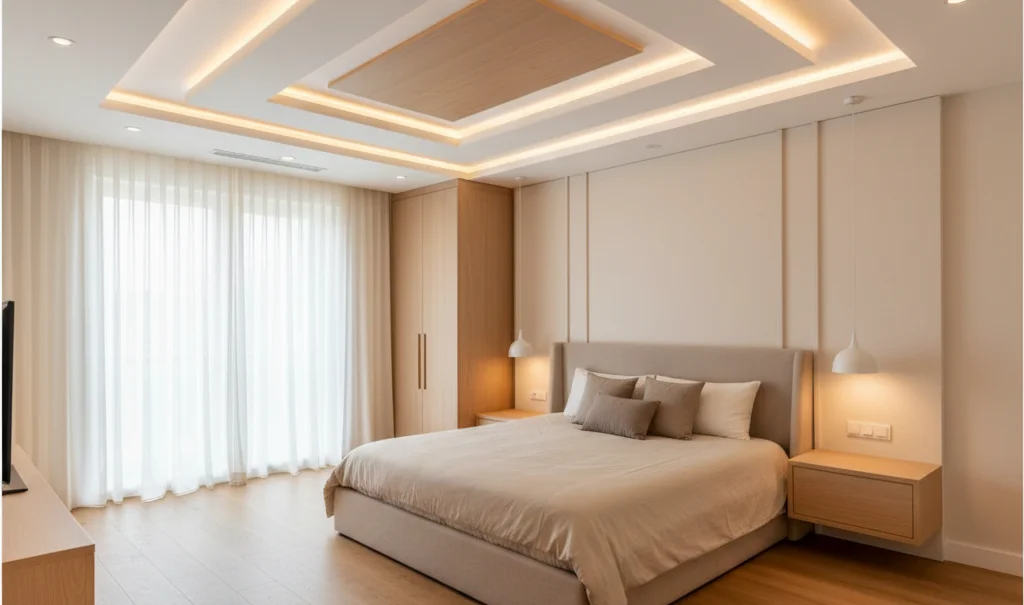
Ceiling Design Simple & Minimal
Ceiling design simple and minimal approaches prioritize essential function and understated elegance over decorative complexity. These designs recognize that effective ceiling treatments need not involve elaborate patterns or multiple levels to enhance interior spaces meaningfully. Simple ceiling designs focus on quality execution, appropriate materials, and thoughtful lighting integration creating sophisticated environments feeling timeless rather than trend-dependent.
The primary advantage of simple ceiling designs lies in their versatility and longevity. Elaborate ceiling treatments may eventually feel dated as design trends evolve, while minimalist approaches maintain relevance across changing styles. Simple designs also complement diverse furniture styles and decorating schemes, providing flexibility as your preferences evolve over time. This adaptability makes simple ceiling designs particularly valuable for homeowners preferring to update room aesthetics through furniture and accessories rather than architectural modifications requiring substantial investment.
Implementing simple ceiling designs demands attention to execution quality and detail precision. Without decorative elements distracting the eye, any imperfections in finish quality, joint alignment, or paint application become noticeably apparent. Professional-quality workmanship becomes even more critical for simple designs than complex ones. The goal is refined simplicity rather than bare utilitarianism, creating spaces feeling intentionally minimal rather than unfinished or neglected.
Budget-conscious homeowners particularly appreciate simple ceiling designs because they deliver significant aesthetic improvements without requiring extensive investment in materials or specialized labor. A basic single-level false ceiling with strategically placed recessed lighting transforms room appearance and functionality while remaining affordable for most renovation budgets. Adding simple crown molding or a subtle recessed section above a focal point enhances these basic designs without substantially increasing costs, providing good value for investment.
False Ceiling vs Normal Ceiling (Comparison)
Understanding the practical differences between false ceilings and normal ceilings helps homeowners make informed decisions about whether ceiling installation justifies the investment for their specific situations. Normal ceilings, which are the structural concrete or plaster surfaces forming the actual building enclosure, serve purely functional purposes. False ceilings, also called dropped or suspended ceilings, create secondary ceiling planes below the structural surface, enabling aesthetic improvements and functional enhancements impossible with normal ceilings alone.
Aesthetic flexibility represents false ceilings’ most obvious advantage. Normal concrete ceilings typically appear rough and unfinished, showing construction marks, uneven surfaces, and visible wiring or piping. False ceilings provide smooth, finished surfaces that accept paint or other decorative treatments, creating polished interiors suitable for contemporary living standards. The ability to create varied ceiling heights, incorporate lighting fixtures seamlessly, and add architectural details transforms rooms from basic boxes into refined living environments.
Lighting integration capabilities distinguish false ceilings dramatically from normal ceiling approaches. Normal ceilings require surface-mounted fixtures or pendant lights suspended visibly from the ceiling, limiting design flexibility. False ceilings accommodate recessed lighting, indirect cove lighting, and concealed fixtures creating layered illumination impossible with normal ceiling configurations. This lighting control dramatically improves both functionality and ambiance in residential spaces.
Utility concealment provides significant practical value. False ceilings hide electrical wiring, plumbing pipes, HVAC ducts, and structural imperfections that would remain visible with normal ceilings. This concealment creates cleaner aesthetics while maintaining access to utilities through removable panels when maintenance becomes necessary. The air gap between false and structural ceilings also provides space for insulation improving thermal and acoustic performance.
Cost considerations favor normal ceilings for budget-constrained projects. Normal ceilings require only basic plaster finishing and paint, representing minimal additional expense beyond structural construction costs. False ceiling installation involves material costs for framework, gypsum boards, and finishing materials, plus labor expenses for installation and painting. Projects with tight budgets might allocate resources to other design elements rather than ceiling treatments.
Height reduction represents false ceilings’ primary disadvantage. Standard false ceiling installations reduce room height by 6 to 8 inches, sometimes more for complex designs. Rooms with low existing ceiling heights may feel oppressively compressed after false ceiling installation. Normal ceilings preserve full room height, maintaining spacious feelings in rooms with limited vertical dimensions. This tradeoff requires careful consideration based on existing ceiling heights and room proportions.
False Ceiling Design According to Room Size
Room dimensions fundamentally influence appropriate false ceiling design approaches. Small rooms measuring under 120 square feet require restrained ceiling treatments avoiding visual clutter that emphasizes limited space. Simple single-level false ceilings in light colors with minimal recessed lighting work best, creating clean, uncluttered appearances that maximize perceived spaciousness. Avoid multi-level designs or elaborate lighting arrangements overwhelming small spaces and making them feel even more confined.
Medium-sized rooms ranging from 120 to 250 square feet accommodate moderate ceiling design complexity. These spaces support single-level designs with distinctive lighting arrangements or simple two-level designs creating focal points without overwhelming the room. A recessed central section with cove lighting around perimeters provides visual interest while maintaining comfortable proportions. Medium rooms offer design flexibility without the constraints affecting small spaces or the opportunities available in large rooms.
Large rooms exceeding 250 square feet benefit from more substantial ceiling treatments preventing the space from feeling empty or unfinished. Multi-level designs with varied ceiling heights help organize large open areas into visual zones supporting different functions. Elaborate lighting arrangements incorporating multiple fixture types create layered illumination appropriate for large space dimensions. Large rooms justify the investment in complex ceiling designs because the visual impact scales appropriately with room size.
Room shape also influences design approaches. Rectangular rooms often benefit from ceiling designs emphasizing the room’s length through linear elements or directional lighting. Square rooms work well with symmetrical, centered ceiling designs creating balanced compositions. Irregular room shapes require custom design approaches addressing specific spatial challenges. Ceiling design can help regularize perceptions of oddly shaped spaces through strategic visual organization.
Ceiling height critically affects design possibilities. Rooms with generous ceiling heights of 10 feet or higher accommodate substantial ceiling height reduction without creating compressed feelings, enabling complex multi-level designs. Standard ceiling heights of 9 to 10 feet limit design complexity because simple approaches preserving maximum height work best. Rooms with low ceilings under 9 feet may not suit false ceiling installation at all, as further height reduction creates uncomfortably cramped environments regardless of design quality.
False Ceiling Lighting Types & Placement
Recessed downlights represent the most common false ceiling lighting choice. These fixtures sit flush with the ceiling surface, providing focused illumination without visible bulkiness. Downlights work well for general ambient lighting when spaced appropriately throughout the ceiling. They also serve as task lighting when positioned above specific activity areas like reading nooks or dining tables. The spacing typically follows guidelines of one fixture per 25 to 30 square feet for adequate general illumination.
Cove lighting involves installing LED strips or linear fluorescent tubes in recesses around ceiling perimeters or within architectural details. The light source remains hidden, with illumination reflecting off surrounding surfaces to create soft, indirect ambient light. Cove lighting adds warmth and visual depth to rooms without the harshness of direct lighting. This technique works particularly well in bedrooms and lounges where gentler illumination enhances comfort and relaxation.
Track lighting and spotlights provide directional illumination highlighting specific features like artwork, architectural details, or decorative elements. These fixtures mount to the false ceiling surface or recesses, offering adjustable positioning that accommodates changing display arrangements. Track lighting suits contemporary interiors where flexibility and visual interest matter more than the seamless integration of recessed fixtures.
Pendant lights and chandeliers require careful coordination with false ceiling design. The ceiling must provide adequate structural support for hanging fixtures, with mounting points planned during the false ceiling framework installation. Pendant arrangements work beautifully as focal points in dining areas, living halls, or above kitchen islands. The false ceiling design should frame these statement fixtures rather than competing with them visually.
LED strip lighting offers versatility for creative ceiling lighting effects. Strips installed along edges of recessed sections, within geometric cutouts, or behind translucent panels create distinctive illumination patterns impossible with traditional fixtures. Color-changing LED strips enable mood lighting adjustments, though this feature should be used thoughtfully to avoid gimmicky effects that quickly feel dated.
Lighting placement strategy requires considering room function and furniture layout. General ambient lighting should distribute evenly across the ceiling, avoiding dark corners or excessively bright zones. Task lighting positions above specific work areas or activity zones. Accent lighting highlights features deserving attention. Layering these lighting types creates flexible, functional environments adaptable to different times of day and activities.

Furniture Coordination with False Ceiling Design
Successful interior design requires coordination between ceiling treatments and furniture selections. The visual weight of your ceiling design should balance with furniture scale and style. Heavy, ornate furniture pairs naturally with more substantial ceiling designs featuring coffers, detailed moldings, or bold geometric patterns. Lightweight, minimalist furniture works best with simpler ceiling treatments that don’t visually overpower the space. Mismatched visual weights create disjointed interiors lacking cohesion.
Color coordination between ceilings and furniture establishes visual harmony. Light-colored ceilings paired with darker furniture create dramatic contrast emphasizing both elements. Monochromatic schemes with similar tones throughout the room produce calm, unified environments. Consider whether your furniture features warm or cool tones, then select ceiling colors that complement rather than clash with these undertones. Ceiling accent colors in recessed sections can echo furniture upholstery or decorative accessories, creating intentional color relationships throughout the room.
Style consistency prevents awkward aesthetic conflicts. Traditional furniture with classical detailing pairs naturally with coffered ceilings, crown molding, and warm finishes. Contemporary furniture with clean lines works best with minimal ceiling designs featuring simple recesses and modern lighting. Transitional furniture benefits from ceiling designs bridging traditional and contemporary elements. Forcing mismatched styles creates confused interiors that never feel quite right regardless of individual element quality.
Spatial planning requires considering how ceiling design relates to furniture arrangement. Lower ceiling sections can define seating areas, dining zones, or other functional spaces that furniture arrangements support. Lighting integrated into false ceilings should relate logically to furniture placement, with task lighting positioned above reading chairs, dining tables, or work surfaces. Ambient lighting should illuminate circulation paths between furniture groupings. This coordination ensures ceiling design supports rather than ignores how you actually use the space.
Proportional relationships matter significantly. Large sectional sofas or substantial bedroom furniture suits rooms with adequate ceiling height and appropriately scaled ceiling features. Delicate furniture pieces can appear lost under overly elaborate ceiling treatments. The ceiling shouldn’t dominate visual attention but should provide appropriate backdrop framing furniture and creating complete environments where all elements work together harmoniously.
Step-by-Step False Ceiling Planning Process
Step 1: Assessment and Goal Setting begins the planning process. Evaluate your existing ceiling condition, measure room dimensions accurately, and note ceiling height. Identify visible wiring, plumbing, or structural elements requiring concealment. Define your goals clearly. Do you primarily want improved aesthetics, better lighting, utility concealment, or combination benefits? Understanding priorities guides subsequent decisions and prevents scope creep during implementation.
Step 2: Design Development translates goals into specific design concepts. Research ceiling design styles matching your aesthetic preferences and room characteristics. Create rough sketches or collect reference images illustrating desired approaches. Consider how the ceiling design relates to existing or planned wall treatments, flooring, and furniture. Develop a lighting plan identifying fixture types, quantities, and positions based on room function and desired ambiance. This stage benefits significantly from professional designer input if budget allows.
Step 3: Material Selection involves choosing appropriate materials for your design and budget. Gypsum board remains standard for most false ceiling applications, available in various thicknesses and specifications. Consider moisture-resistant variants for bathrooms or kitchens. Research local material suppliers to understand availability and pricing. Select lighting fixtures, ensuring they’re suitable for recessed ceiling installation. Choose finishes including paints, decorative elements, or special materials like wood veneers if your design incorporates them.
Step 4: Budget Planning establishes financial parameters preventing mid-project complications. Obtain detailed quotations from contractors including materials, labor, and finishing work. Factor in lighting fixture costs, electrical work, and finishing materials. Include contingency funds of 10 to 15 percent for unexpected complications. Compare quotes from multiple contractors, evaluating not just price but also reputation, experience with similar projects, and communication quality.
Step 5: Contractor Selection requires careful evaluation. Request references from past clients and view completed projects when possible. Verify licensing and insurance coverage protecting you from liability. Discuss your design intentions thoroughly, assessing whether contractors understand your vision and can offer valuable input. Establish clear communication expectations and project timeline. A detailed written contract specifying work scope, materials, timeline, payment schedule, and warranty terms protects both parties.
Step 6: Timeline Development creates realistic expectations and minimizes disruption. Discuss the work sequence with your contractor. Ceiling installation typically requires several days to weeks depending on complexity and room size. Factor in curing time for plaster compounds and paint. Plan furniture removal and room protection. Arrange alternative arrangements if the work affects bedrooms or other essential spaces. Buffer time for potential delays prevents stress when complications arise.
Step 7: Execution and Supervision ensures the project proceeds according to plan. Maintain regular communication with contractors without micromanaging. Address concerns or questions promptly. Inspect work quality at key milestones, particularly after framework installation, boarding completion, and before final painting. Document any deviations from agreed plans immediately. Good contractor relationships balance trust with appropriate oversight ensuring satisfactory results.
Step 8: Completion and Evaluation concludes the process. Conduct thorough final inspection checking finish quality, lighting function, and overall appearance against your expectations. Test all electrical components ensuring proper operation. Address any deficiencies before final payment. Request maintenance guidance and warranty documentation. Photograph the completed work for your records. Honest evaluation of the process and results informs future renovation decisions.
False Ceiling Design by Budget Range
Economy budget range from PKR 150 to 250 per square foot covers basic false ceiling installations suitable for cost-conscious projects. This range typically includes simple single-level gypsum board ceilings with basic recessed lighting using standard downlights. Finishes involve standard paints in simple colors without elaborate decorative elements. Economy installations still deliver substantial improvements over unfinished ceilings, providing clean surfaces and basic lighting integration that transforms room appearance affordably.
Economy range projects require realistic expectations. While professional contractors can deliver quality work within this budget, design complexity must remain minimal. Expect straightforward layouts without multiple levels, elaborate lighting schemes, or premium materials. Focus resources on execution quality rather than design intricacy. Even simple ceiling designs significantly improve interior aesthetics when properly installed with clean finishes and appropriate lighting placement.
Mid-range budget from PKR 250 to 400 per square foot enables more sophisticated ceiling designs with enhanced features. This range accommodates two-level designs, moderately complex lighting arrangements including cove lighting or multiple fixture types, and better quality materials or finishes. Mid-range budgets support designs with distinctive character while maintaining reasonable cost control. Most homeowners find mid-range budgets provide satisfying balance between design ambition and financial responsibility.
Mid-range projects benefit from professional design input ensuring resources allocate effectively. An interior designer helps develop ceiling concepts maximizing visual impact within budget constraints, avoiding wasteful complexity while incorporating features delivering genuine value. This investment level supports most practical design goals for residential spaces without entering luxury territory where costs escalate rapidly for incremental improvements.
Premium budget exceeding PKR 400 per square foot enables elaborate ceiling designs with complex multi-level structures, extensive lighting integration, premium materials, and detailed finishing. Premium budgets support custom designs expressing strong individual style through distinctive architectural features, high-end lighting fixtures, and exceptional finish quality. This range suits larger homes, master suites, or primary living spaces where ceiling design makes significant statements about overall interior quality.
Premium projects demand experienced contractors with proven capabilities delivering complex work meeting high standards. Detailed planning and professional design services become essential investments ensuring premium budgets produce results justifying costs. At this level, subtle details in execution quality, material selection, and design refinement separate adequate results from truly exceptional interiors that provide lasting satisfaction and add measurable value to your property.
Budget allocation strategy matters regardless of total budget. Prioritize execution quality over design complexity. Simple designs executed beautifully outperform complex designs poorly executed. Allocate adequate resources to quality materials and skilled labor rather than stretching budgets to accommodate overly ambitious designs. Consider phased implementation if budget constraints prevent completing desired work immediately. Installing basic false ceilings initially with plans for lighting upgrades or enhancements later maintains progress while respecting financial realities.
Choosing the Right False Ceiling Design
Selecting appropriate false ceiling designs requires systematic evaluation of multiple factors working together to determine optimal solutions. Room function establishes the foundation for design decisions. Living rooms hosting frequent social gatherings benefit from impressive ceiling designs with flexible lighting supporting varied activities. Bedrooms prioritize calming aesthetics and comfortable lighting promoting rest. Kitchens require practical designs with adequate task lighting and moisture-resistant materials. Matching ceiling design to room function ensures investments deliver practical benefits beyond visual appeal.
Existing architecture influences design appropriateness. Homes with traditional architectural character generally suit ceiling designs echoing classical elements like coffers, crown molding, or symmetrical patterns. Contemporary architecture pairs naturally with minimalist ceiling treatments featuring clean lines and geometric simplicity. Transitional designs bridge these extremes, incorporating subtle traditional references within predominantly modern frameworks. Fighting against your home’s architectural character creates disjointed results lacking visual coherence.
Personal style preferences deserve serious consideration since you’ll live with ceiling design decisions daily. Collect reference images illustrating ceiling styles appealing to you. Identify common themes in your preferences. Do you gravitate toward ornate detailing or simple clarity? Warm or cool color palettes? Symmetrical or asymmetrical compositions? Understanding your aesthetic inclinations helps articulate design intentions to contractors or designers, increasing likelihood of satisfying outcomes matching your vision.
Maintenance considerations affect long-term satisfaction. Elaborate ceiling designs with multiple levels and extensive lighting require more maintenance than simple installations. Dust accumulation in recesses needs periodic cleaning. Light fixtures eventually require bulb replacement or servicing. Painted surfaces may need refreshing over time. Honestly assess your willingness to perform ongoing maintenance or budget for professional cleaning services. Lower-maintenance designs suit busy households or those preferring minimal upkeep obligations.
Future flexibility matters for homeowners anticipating changing needs or tastes. Will your ceiling design accommodate different furniture arrangements or decorating schemes over time? Neutral, relatively simple ceiling designs provide maximum flexibility for future updates through furniture, paint colors, or accessories without requiring ceiling modifications. Highly specific or trendy ceiling designs may eventually feel limiting or dated, potentially requiring costly renovations maintaining satisfaction with your interiors.
Professional consultation benefits most homeowners even when budgets limit full designer involvement. Initial consultations help clarify design options, identify potential challenges, and establish realistic budgets and timelines. Experienced professionals offer perspectives based on numerous past projects, helping you avoid common mistakes and achieve better results than uninformed trial and error approaches. The modest investment in professional guidance often saves money overall by preventing expensive corrections or disappointments.
How False Ceiling Enhances Interior Design
False ceilings function as integral components within comprehensive interior design schemes rather than isolated decorative elements. When properly designed and implemented, false ceilings enhance spatial perception, making rooms feel more proportionate and refined. Lowering ceiling height slightly in rooms with excessive vertical space creates more intimate, comfortable environments. Conversely, strategic ceiling design with light colors and appropriate lighting can make smaller rooms feel more spacious despite actually reducing physical ceiling height slightly.
Lighting quality improvement through false ceiling integration dramatically enhances interior comfort and functionality. Traditional ceiling-mounted fixtures produce harsh, flat illumination creating uncomfortable shadows and monotonous ambiance. False ceilings enable layered lighting strategies combining ambient, task, and accent lighting creating nuanced, adaptable environments. Recessed fixtures provide general illumination without visible clutter. Cove lighting adds gentle ambient warmth. Strategically positioned spotlights highlight architectural features or artwork. This sophisticated lighting control transforms how spaces feel and function throughout the day.
Acoustic benefits of false ceiling installations improve comfort particularly in spaces with hard surface finishes. The air gap between false and structural ceilings provides sound insulation reducing noise transmission between floors in multi-story buildings. Adding acoustic insulation materials within this cavity further enhances sound control. False ceilings also improve room acoustics by reducing echo and reverberation, creating more comfortable sound environments especially beneficial in larger rooms where sound reflections might otherwise feel harsh or tiring.
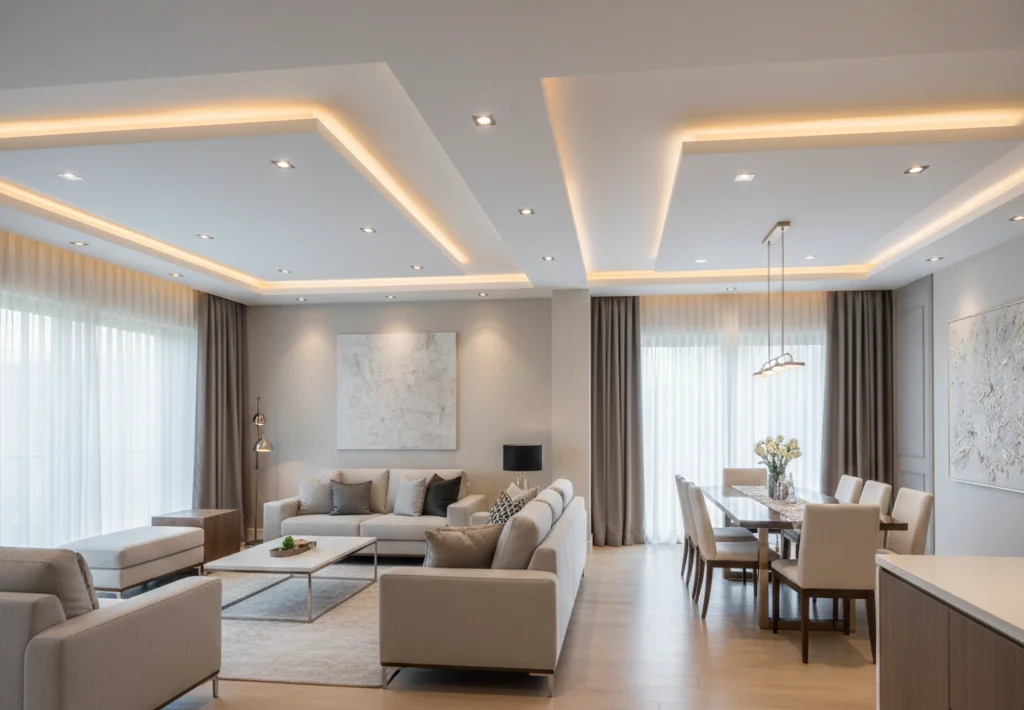
Visual organization through ceiling design helps define functional zones within open-plan spaces. Varying ceiling heights, changing materials, or altering lighting treatments delineate areas for different activities without physical walls interrupting flow. A lowered ceiling section above a dining area distinguishes it from adjacent living space while maintaining visual connection. This subtle spatial definition makes open plans feel organized and purposeful rather than undefined or chaotic.
Architectural character develops through thoughtful ceiling design adding distinctive personality to otherwise generic spaces. A well-designed ceiling transforms ordinary rooms into memorable spaces with unique character reflecting personal style and design sophistication. This character enhancement contributes significantly to overall.
False ceilings function as integral components within comprehensive interior design schemes rather than isolated decorative elements. When properly designed and implemented, false ceilings enhance spatial perception, making rooms feel more proportionate and refined. According to widely accepted interior design principles related to space planning and proportion, ceiling height, color, and lighting placement play a critical role in shaping how a room is visually and functionally experienced.
Frequently Asked Questions About False Ceiling Design
1. Is a false ceiling suitable for all types of homes?
False ceilings are suitable for most residential spaces including apartments, houses, and villas. The key factors are ceiling height, room size, and ventilation. Rooms with lower heights benefit from simple designs, while larger spaces can accommodate multi level ceiling treatments.
2. What should be considered before choosing a false ceiling design?
Room function, ceiling height, lighting requirements, and budget are the most important considerations. Living rooms usually require flexible lighting and visual impact, while bedrooms need calm designs with soft illumination. Maintenance requirements should also be considered during planning.
3. Which false ceiling material works best in Pakistani climate?
Gypsum board is the most commonly used and reliable material due to its smooth finish, durability, and compatibility with local climate conditions. Moisture resistant gypsum boards are recommended for areas exposed to humidity.
4. What type of lighting works best with false ceilings?
Recessed LED lights and cove lighting are the most effective options. Recessed lights provide general illumination, while cove lighting creates soft ambient light. Dimmable lighting systems are ideal for bedrooms and lounges.
5. Does a false ceiling require high maintenance?
A properly installed false ceiling requires minimal maintenance. Regular dust cleaning and periodic lighting checks are usually sufficient. Simple designs are easier to maintain compared to highly detailed or multi level ceilings.
Final Thoughts on False Ceiling Design
A well designed false ceiling is not just a decorative feature but a functional element that enhances the overall interior experience. It improves lighting quality, refines spatial proportions, and helps organize spaces visually. When designed thoughtfully, false ceilings contribute to comfort, efficiency, and long term visual appeal.
Choosing the right design involves understanding room size, ceiling height, furniture layout, and lifestyle needs. Simple and well executed ceiling designs often provide the best long term value. With proper planning and professional execution, a false ceiling can significantly enhance the appearance, usability, and overall quality of any living space.

3 comments
Pingback:
Living Room Furniture in Pakistan 2026 Best Buying GuidPingback:
How to Buy Furniture in Pakistan – Complete Buying Guide - N.M FurnishersPingback:
10 Best Furniture Shops in Pakistan Pros & Cons Guide